Don't Buy the 49Wl95C W Until You Read This Full Analysis
The 49Wl95C W has drawn attention as a large-format display option for professionals, gamers, and power users who want a single-screen workspace to replace multi-monitor setups. Before committing to such a significant purchase, it is important to understand how the product performs in real-world scenarios, where it excels, and where buyers should watch out. This article provides a comprehensive, practical analysis of the 49Wl95C W—covering design, image quality, connectivity, ergonomics, use cases, and a guided checklist to help potential buyers make an informed decision.
Introduction: Who the 49Wl95C W is For
Large ultrawide displays occupy a narrow but growing niche. The 49Wl95C W targets users who prioritize expansive horizontal screen real estate: multitasking professionals, video editors, 3D artists, traders, and gamers seeking immersive experiences. The idea is attractive—one uninterrupted desktop with room for multiple app windows, timelines, and reference materials without bezels interrupting the view. However, a screen of this scale also magnifies every shortcoming: color uniformity issues, inadequate brightness, poor ergonomics, or limited port selection become more noticeable and more consequential.
Product Overview and Key Specifications
In evaluating the 49Wl95C W, the most useful starting point is a concise look at the attributes buyers will interact with every day. While vendors sometimes produce multiple variants, the essential attributes for this class of product typically include:
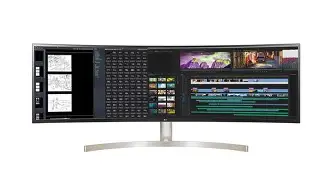
- Size and aspect ratio: A near 49-inch diagonal with an ultrawide aspect ratio (commonly 32:9 or similar).
- Panel type: VA, IPS, or OLED are possible; each has trade-offs in color, contrast, and viewing angles.
- Resolution: High horizontal pixel counts (e.g., 5120×1440) to preserve clarity at large sizes.
- Refresh rate: Standard 60 Hz for productivity models, higher (120 Hz or more) for gaming-focused variants.
- Color support: Coverage of sRGB, Adobe RGB, or DCI-P3 depending on target users.
- Connectivity: HDMI, DisplayPort, USB-C/Thunderbolt, and USB hubs are key for desk setups.
- Ergonomics and stand: Height, tilt, swivel, and pivot options; VESA for alternative mounting.
This analysis examines the 49Wl95C W across these dimensions and translates technical details into buyer-relevant conclusions.
Design and Build Quality
At this size, build quality matters more than on smaller displays. The 49Wl95C W presents a minimalist, utilitarian aesthetic: narrow bezels reduce visual interruptions and a matte finish on the casing helps minimize reflections. The chassis should remain rigid; any noticeable panel flex or a light-springy stand can undermine perceived value.
One practical design consideration is footprint. Large ultrawide monitors often require a deep desk or careful placement to avoid obstructing speakers or peripherals. The 49Wl95C W's default stand design and included cable management dictate how tidy a workspace can be. Buyers should verify exact stand dimensions and whether the monitor ships with a VESA mounting bracket; a compatible monitor arm is often a superior long-term choice.
Display Performance: Clarity, Uniformity, and Color
Display performance is the core of any monitor review. For a screen of this width, pixel density and resolution define how crisp text and UI elements appear when sitting at typical desk distances. A resolution near 5120×1440 on a 49-inch panel yields a comfortable balance: text remains legible without excessive scaling, while horizontal space is ample.
Color reproduction and uniformity are crucial for creators. Buyers often care about how well a screen reproduces sRGB and wider gamuts like DCI-P3 or Adobe RGB. The 49Wl95C W must be judged on factory calibration and the ability to be calibrated with a colorimeter. Color consistency across the full horizontal span can be challenging; slight shifts from one side to the other are possible in large LCDs and are more obvious on gradient images. For professional color work, verify advertised gamut coverage and whether the manufacturer supplies calibration profiles.
Viewing angles depend on the underlying panel. IPS panels typically offer the best color stability across angles, while VA panels deliver deeper contrast but narrower ideal viewing zones. For team reviews or multiple viewers, an IPS-style performance is more forgiving.
Looking for the best Electronics deals on Amazon?
See Deals →Contrast and HDR
Contrast ratio and HDR (High Dynamic Range) support affect perceived depth and highlight detail. In many monitors of this size, HDR is implemented in a basic way—an HDR flag without sufficient brightness or local dimming will not produce the dramatic effect HDR-capable content demands. If HDR is an important feature, look for high peak brightness, effective local dimming (mini-LED or similar), and a high native contrast ratio. Otherwise, HDR may be a checkbox rather than a practical benefit.
Connectivity and Built-in Features
Modern desks require flexibility. The 49Wl95C W's value increases significantly when it supports:
- Multiple high-bandwidth inputs: At least one DisplayPort and multiple HDMI ports to support several sources.
- USB-C or Thunderbolt: Single-cable docking capability for laptops, delivering video, data, and power.
- USB hub: Upstream USB Type-B or USB-C with several downstream ports for peripherals.
- Built-in KVM: Allows switching keyboard/mouse between two connected computers, a real productivity win.
Speakers are convenient but rarely replace a dedicated audio setup. The 49Wl95C W's onboard audio should be considered a bonus rather than a reason to buy.
Ergonomics and Daily Use
Ergonomics determine how comfortable long sessions are. Buyers typically care about height adjustment range, tilt angle, and whether the monitor can pivot or swivel. The recommended viewing setup is eye level near the top third of the screen; with a 49-inch display, the vertical real estate can be tall enough to require adjusting seat or monitor height to maintain a healthy posture.
Another everyday factor: software and OSD (On-Screen Display) usability. Good multi-window management tools, pre-configured layout presets, and a simple, responsive joystick or button scheme streamline use. The 49Wl95C W's OSD and companion software should facilitate arranging application windows across the wide canvas and assigning inputs quickly.
Real-World Use Cases
Examining how the 49Wl95C W performs in specific scenarios helps buyers align their needs with the product’s strengths.
Productivity and Multitasking
For spreadsheet users, developers, and anyone juggling multiple documents, a wide single-screen setup removes bezel gaps and simplifies window management. The 49Wl95C W allows side-by-side app placement with room left over for tool palettes, email, or reference materials. This reduces wrist travel between monitors and cuts down on window-switching friction.
Content Creation
Video editors and creative professionals benefit from a long timeline view and simultaneous access to preview windows and assets. For color-critical work, the display must deliver consistent gamut coverage and be calibratable. If the 49Wl95C W lacks hardware calibration support or adequate uniformity, professionals might still prefer dual calibrated monitors.
Discover deals on Electronics — updated daily.
Shop Amazon →Gaming and Entertainment
Gamers experience immersive wide-field views in titles that support ultrawide aspect ratios. However, compatibility issues can arise: some games crop or stretch images, and competitive gamers may prioritize high refresh rates and low input lag over sheer size. For casual or single-player gaming, the 49Wl95C W’s scale is compelling; for esports, a high-refresh smaller monitor may be preferable.
Trading, Data Analysis, and Control Rooms
Traders, analysts, and operators who monitor streams of data find the continuous horizontal space beneficial for tracking multiple charts, feeds, or dashboards. Reliability, display uniformity, and sustained brightness matter in these always-on applications.
Pros & Cons
- Pros:
- Expansive screen real estate reduces the need for multi-monitor setups.
- Seamless horizontal workspace is excellent for timelines, spreadsheets, and multitasking.
- Potential for single-cable docking simplifies laptop connections if USB-C/Thunderbolt is supported.
- Built-in KVM and USB hub can reduce desktop clutter and improve workflow switching.
- Cons:
- Large panels can reveal color uniformity and backlight inconsistencies if manufacturing tolerances are loose.
- Desk-space and mounting considerations require planning; the stand footprint can be large.
- HDR performance is often limited on large LED panels without local dimming.
- Some applications and games do not natively support ultrawide aspect ratios, resulting in black bars or stretched images.
Comparison Table
| Feature | 49Wl95C W | Typical 49" Ultrawide Competitor | Dual 27" 16:9 Setup |
|---|---|---|---|
| Screen Size | ~49 inches (ultrawide) | ~49 inches (ultrawide) | Two × 27 inches |
| Aspect Ratio | Very wide (e.g., 32:9) | Very wide (e.g., 32:9) | Two standard 16:9 panels |
| Seamless Workspace | Yes | Yes | No (bezel gap) |
| Color Uniformity | Varies by unit | Varies by unit | Generally better per panel, easier local calibration |
| HDR Potential | Depends on backlight tech | Higher-end models may use mini-LED | Depends on panels chosen |
| Ergonomics | Single height-adjustable screen | Single screen, similar | Two adjustable stands, more flexible arrangement |
| Cost | Often mid-to-high | Wide range | Variable — can be cheaper or more expensive depending on panels |
Buying Guide: What to Check Before Purchase
When considering the 49Wl95C W or similar large ultrawide monitors, focus on the following checklist to ensure the product meets daily needs and expectations:
- Resolution and Pixel Density: Confirm the native resolution. High horizontal pixel count is essential to prevent a stretched, low-detail look. For 49-inch displays, resolutions like 5120×1440 keep UI elements sharp without extreme scaling.
- Panel Technology: Choose IPS for color-critical work and wide viewing angles; VA if deep blacks and contrast matter more than angular color stability; OLED if available and budget allows, but check for burn-in considerations.
- Color Gamut and Calibration: Look for advertised coverage (sRGB, DCI-P3, Adobe RGB) and whether hardware or factory calibration is provided. Consider whether third-party calibration is supported.
- Refresh Rate and Response Time: 60 Hz is adequate for productivity; higher refresh rates benefit gaming. Investigate input lag and response time figures if gaming performance is a priority.
- HDR Implementation: Read beyond the HDR logo. Effective HDR requires high peak brightness and some form of local dimming. If HDR is important, prioritize models with credible HDR standards and meaningful specs.
- Connectivity: Verify the number and type of ports: DisplayPort 1.4 or higher, HDMI 2.1 for modern consoles, and USB-C/Thunderbolt for docking are highly desirable. A built-in KVM is a tangible productivity feature.
- Ergonomics and Mounting: Confirm VESA compatibility and whether the included stand offers sufficient adjustment. For many desks, a compatible monitor arm is preferable.
- Warranty and Support: Check the warranty period, dead-pixel policy, and return window. Large panels can have manufacturing variations—flexible return policies reduce risk.
- Desk Fit and Viewing Distance: Measure desk depth and consider viewing distance. A 49-inch panel can overwhelm small desks and may require a deeper setup than expected.
- User Reviews and Unit Variance: For large panels, sample variation can be significant. Look for reports on uniformity, backlight bleed, and Q/C consistency.
Practical Tips for Setup and Use
To get the most from a purchase like the 49Wl95C W, follow these practical steps:
- Plan desk layout and cable routing before unboxing. Ensure sufficient clearance for the monitor base or mount.
- Use the monitor's native resolution and adjust OS scaling for readable text—avoid running at non-native resolutions.
- Perform a calibration pass with a colorimeter if accurate color is required; rely on factory settings only for casual use.
- Test multiple inputs and sources to confirm compatibility with existing hardware (laptops, desktop GPU, consoles).
- Consider a desk-mounted arm if the monitor stand limits placement flexibility or wastes desk real estate.
Conclusion
The 49Wl95C W represents the promise and the caveats of very large ultrawide displays. Its core appeal—an expansive, uninterrupted workspace—addresses many modern productivity and creative workflows. When the panel, connectivity, and ergonomics align with a user's needs, this class of monitor can simplify work, improve focus, and deliver an immersive media experience.
However, the advantages come with trade-offs: potential uniformity issues, the physical demands on desk space, and the possibility that certain software or games will not make effective use of the ultrawide aspect ratio. Prospective buyers should confirm resolution, panel type, connectivity options, and warranty details before purchasing. For professionals requiring strict color fidelity, verify calibration capability and unit-to-unit consistency.
In short, the 49Wl95C W is a compelling option for users who value horizontal workspace and reduced bezel interruptions—but only after careful comparison against alternatives, attention to desk ergonomics, and realistic expectations about HDR and color performance. Read the specs, check real-world user feedback, and, if possible, see the unit in person before deciding. That due diligence ensures the purchase will support daily workflows rather than introduce avoidable compromises.