Should You Upgrade from Gtbox G Dock Egpu Docking Station to Netgear Nighthawk Rs100?
Introduction
When laptop owners consider upgrades, they usually think in terms of solving a concrete problem: faster graphics, more ports, better wireless coverage, or lower latency. That makes the question “Should you upgrade from a GTBOX G Dock eGPU docking station to a Netgear Nighthawk RS100?” a bit unusual at first glance — the two products solve different problems. One extends a laptop’s graphics and port capabilities; the other typically improves home or small-office networking.
This article breaks down the real-world trade-offs and use cases to help readers decide whether replacing a GTBOX G Dock eGPU Docking Station with a Netgear Nighthawk RS100 makes sense for them. It covers product roles and capabilities, pros and cons, a side-by-side comparison table, a practical buying guide, and an evidence-based conclusion. The goal is practical advice focused on what buyers typically care about: compatibility, performance, ease of setup, long-term value, and how each product affects daily workflows like gaming, video editing, and remote work.
Understanding the Products and Their Roles
GTBOX G Dock eGPU Docking Station — What it does
The GTBOX G Dock eGPU Docking Station is designed to augment a laptop with a discrete graphics card and additional ports. It connects over a high-bandwidth interface (typically Thunderbolt), allowing a supported laptop to use a desktop-class GPU for tasks that require heavy graphics or compute power. In practical terms, it aims to: enable higher-frame-rate gaming on thin-and-light laptops, accelerate GPU-heavy creative workflows (video export, color grading, 3D rendering), and provide extra I/O such as DisplayPort/HDMI outputs, USB-A/C ports, and Ethernet.
Netgear Nighthawk RS100 — What it does
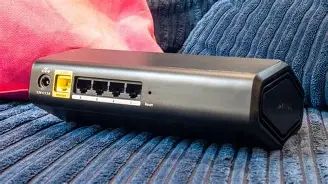
The Netgear Nighthawk RS100 belongs to Netgear’s Nighthawk family of networking devices and is generally positioned as a home or small-office router. Its core purpose is to provide local network routing, Wi‑Fi coverage, and features like Quality of Service (QoS), device prioritization, and firmware-based security enhancements. For many users, upgrading a router improves multi-device streaming, reduces wireless dead spots, lowers latency for online gaming, and enables faster transfers to NAS or local devices.
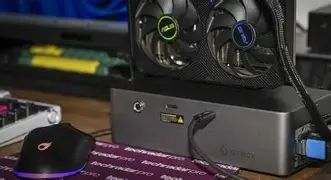
At a high level, then, the two devices are complementary rather than competitive. An eGPU docking station upgrades a laptop’s local compute and display capabilities; a Nighthawk router upgrades network connectivity. That distinction shapes every recommendation below.
Detailed Product Analysis
Real-world use cases for the GTBOX G Dock eGPU Docking Station
- Mobile creators who edit 4K video on a light laptop and need faster render/export times without buying a desktop.
- Gamers with ultraportable laptops that lack discrete GPUs who want higher frame rates when docked at home.
- Professionals who need multiple monitors and additional USB/Ethernet ports from a single Thunderbolt connection.
- Users who want a modular upgrade path—swap GPU cards as needs evolve.
Real-world use cases for the Netgear Nighthawk RS100
- Households or small offices with many simultaneous streaming sessions and online gaming that need better Wi‑Fi capacity and prioritization.
- Users with poor wireless coverage who want a modern router to reduce dead zones and improve throughput.
- Remote workers or streamers who need stable uplink performance for video calls and live streams.
- People who want router-level features such as guest networks, parental controls, and integrated firmware security updates.
Compatibility and setup considerations
GTBOX eGPU docks require a laptop with a compatible high-bandwidth interface (Thunderbolt 3/4 in most cases) and, depending on the laptop’s OS, may require driver and firmware support. Mac and Windows behavior can differ significantly: some modern Macs (with Apple silicon) have limited or no eGPU support, so buyers must verify compatibility before purchasing.
Netgear routers require minimal platform compatibility — any Wi‑Fi or Ethernet-enabled device can connect — but effectiveness depends on home layout, ISP speed, and whether devices support the router’s Wi‑Fi standard. Advanced router features may require some networking knowledge for optimal configuration.
Pros & Cons
GTBOX G Dock eGPU Docking Station
- Pros:
- Significant GPU performance boost for supported laptops when docked.
- Adds display outputs and extra ports from a single cable.
- Modular: users can upgrade the GPU later without changing the entire dock.
- Improves productivity for GPU-accelerated workloads (editing, rendering).
- Cons:
- Requires a compatible Thunderbolt connection and OS support; not universally supported.
- Can be relatively expensive once a discrete GPU is included.
- Power delivery limits may restrict charging capability for high-wattage laptops.
- Bulk and noise (fans) compared with simple USB-C hubs; not as portable as a thin dock solution.
Netgear Nighthawk RS100
- Pros:
- Improves Wi‑Fi coverage, throughput, and device handling for homes and small offices.
- Reduces latency and stabilizes connections for cloud gaming and video conferencing.
- Often includes useful management features (QoS, guest networks, parental controls).
- Easy to integrate with existing devices — no driver support required on client devices.
- Cons:
- Does not add local compute or GPU power — it cannot replace an eGPU’s functionality.
- Performance improvements are bounded by ISP speed and physical layout; a better router won’t increase ISP bandwidth.
- Advanced features may require some networking know-how to optimize.
Direct Comparison
The table below focuses on the attributes buyers most often evaluate when deciding between upgrading hardware: core function, impact on daily workflows, compatibility requirements, and where each product delivers the most value.
Shop the latest Laptops & Computers picks on Amazon.
Shop Amazon →| Attribute | GTBOX G Dock eGPU Docking Station | Netgear Nighthawk RS100 |
|---|---|---|
| Primary purpose | Provide discrete GPU performance and extra ports to a compatible laptop. | Provide improved Wi‑Fi routing, coverage, and network features for home/soho. |
| Typical buyer | Content creators, mobile gamers, power users needing GPU acceleration. | Households, remote workers, gamers and streamers prioritizing network performance. |
| Compatibility | Requires Thunderbolt and eGPU driver/OS support; Mac compatibility varies. | Works with any Wi‑Fi or Ethernet device; benefits depend on Wi‑Fi standards and client support. |
| Performance impact | Directly increases local compute and graphics performance when used correctly. | Improves network throughput, latency, and multi-device handling; does not change local compute. |
| Portability | Generally bulky and requires external power; semi-portable if planned. | Stationary; intended to be installed in a central home location. |
| Maintenance | Driver/firmware updates and occasional GPU maintenance; potential OS quirks. | Firmware updates; occasional network tuning for best performance. |
| Value if you have one now | Great for sustained GPU workloads; continues to add value to supported laptops. | Great for multi-device homes; often yields immediate improvement for streaming and gaming. |
Who Should Upgrade — Practical Guidance
To determine whether an upgrade is sensible, answer the simple question: what problem is the user trying to solve?
- If the problem is poor graphics performance, low frame rates in games, or slow GPU-accelerated rendering: an eGPU docking solution (like the GTBOX) makes sense. Upgrading to a router will not solve these issues.
- If the problem is poor Wi‑Fi coverage, frequent buffering during streaming, or unstable video calls: a Netgear Nighthawk RS100 or similar router is the relevant upgrade. An eGPU dock won’t improve wireless performance.
- If both problems exist: consider a staged approach. Prioritize the issue that limits productivity most. Many users find networking improvements deliver everyday quality-of-life gains for everyone in a household, while an eGPU is most valuable to a single power user with specific workloads.
- If the intent is consolidation: there is no single device that replaces both an eGPU and a router; they are complementary. Budget accordingly.
Buying Guide — How to Choose the Right Upgrade
Step 1 — Identify the primary bottleneck
Measure and observe. For graphics issues, check framerates, render times, and whether your laptop supports an external GPU. For network issues, run speed tests in multiple rooms, note latency during gaming or meetings, and count simultaneous active devices. A clear diagnosis prevents buying the wrong solution.
Step 2 — Verify compatibility
- eGPU dock: Confirm the laptop supports eGPUs (Thunderbolt ports, BIOS/firmware support, OS compatibility). For Mac users, check whether the specific macOS and hardware support external GPUs — Apple silicon Macs have limited or no eGPU support in many cases.
- Router: Check ISP speed and modem compatibility. If the ISP connection is significantly faster than the router’s WAN port or Wi‑Fi capability, router upgrades may be limited by ISP hardware.
Step 3 — Prioritize features that matter
For eGPU docks, key features include: Thunderbolt bandwidth, power delivery wattage, number and type of display outputs, support for full-length GPUs, and ease of swapping cards. For routers, prioritize: Wi‑Fi standard (Wi‑Fi 6/6E), number of Ethernet ports, QoS, MU‑MIMO, beamforming, mesh compatibility, and security/firmware update policies.
Step 4 — Consider long-term value and ecosystem
An eGPU dock offers upgradeability via GPU swaps, which can extend lifespan if the dock’s chassis and power supply are robust. A router’s long-term value depends on firmware updates and mesh/expansion options. Choose brands and models with reliable update histories, active support, and clear warranty terms.
Step 5 — Evaluate total cost of ownership
Factor in not just the device price but also any necessary accessories: a discrete GPU for an eGPU dock, a modem upgrade for a new router, or additional mesh nodes for whole-home coverage. For an eGPU, remember the GPU itself can be the largest portion of the cost.
Step 6 — Test in a return-friendly environment
If possible, buy from retailers with reasonable return policies. Practical testing — like running a few renders with the eGPU or testing wireless throughput throughout the home with the new router — will confirm whether the upgrade matches expectations.
Common Buyer Questions and Real-World Scenarios
“Will a new router make games run faster on my laptop?”
It depends. A router can lower network latency and reduce packet jitter, which helps in online multiplayer scenarios. However, it won’t increase local frame rates or reduce GPU-bound stuttering — an eGPU or a better internal GPU would be required for that.
Looking for the best Laptops & Computers deals on Amazon?
Shop Amazon →“Is an eGPU worth it for video editors?”
Yes in many cases. An eGPU can dramatically speed up timeline scrubbing, export, and effects processing for software that supports GPU acceleration. The biggest caveat is ensuring the laptop’s Thunderbolt implementation and OS fully support eGPU functionality.
“Can I use both together?”
Absolutely. In fact, power users often benefit from both: an eGPU for local compute and a robust router for stable networked backups, cloud-based collaboration, and low-latency online activities. They serve complementary roles in a modern workflow.
Setup and Practical Tips
eGPU setup tips
- Update BIOS/UEFI and Thunderbolt firmware on the laptop before connecting an eGPU.
- Install or update GPU drivers on the host OS after connecting the enclosure (some setups work best if drivers are installed while the eGPU is present).
- Monitor thermals and power delivery: ensure the dock’s PSU can support the chosen GPU and that the laptop gets sufficient charging if relying on PD.
- Expect the best performance when using a direct Thunderbolt connection (no hubs or daisy-chaining that reduce bandwidth).
Router setup tips
- Place the router centrally to reduce dead zones; elevated positions often help.
- Use wired Ethernet for latency-sensitive devices (gaming PC, eGPU host with network storage).
- Enable QoS or device prioritization for work and gaming devices during busy hours.
- Keep firmware up to date and change default admin credentials for security.
Conclusion
Upgrading from a GTBOX G Dock eGPU Docking Station to a Netgear Nighthawk RS100 is not a simple like-for-like replacement, because the two products solve different problems. If the core issue is insufficient graphics performance, an eGPU remains the targeted, effective solution. If the main pain point is unstable Wi‑Fi, high latency, or poor multi-device streaming, a modern Nighthawk router will deliver clear benefits.
For many users, the right path is not “either/or” but “both/when-necessary”: invest first in the solution that addresses the most immediate productivity or enjoyment bottleneck, and consider the complementary upgrade later. Practical compatibility checks — verifying Thunderbolt and OS support for eGPUs, or ensuring a router can handle the home’s ISP speed and device load — will prevent wasted purchases and ensure the upgrade delivers measurable value.
In short, choose the device that matches the problem. For GPU needs, keep or upgrade the GTBOX eGPU approach; for networking needs, upgrade to a capable router like a Nighthawk. Where budgets permit and workflows demand it, both devices together yield the best overall experience for modern laptop users.